How Much Does a Second-Story Addition Cost in Halifax?
The cost of a second-story addition in Halifax ranges from $250,000 to $550,000+ depending on square footage, structural requirements and finish level.
Reach out to Halifax General Contractors today for a free consultation and accurate quote on your second-floor home addition.
Keep reading to understand the full cost breakdown of a second story addition in Halifax.
| Tier & Size | Cost Range | Features |
|---|---|---|
| Basic 800 - 1,000 sq. ft. |
$250,000 - $300,000 |
Basic finishes and materials 2-3 bedrooms 1 bathroom Simple layout |
| Mid-Range 1,000 - 1,500 sq. ft. |
$300,000 - $450,000 |
Mid-grade finishes and materials 3-4 bedrooms 2 bathrooms More complex layout Potential for small living area |
| Luxury 1,500 - 2,000+ sq. ft. |
$450,000 - $550,000 |
High-end finishes and materials 4+ bedrooms 2-3 bathrooms Spacious layout Additional living spaces (e.g., family room) Custom features |
Factors Affecting The Cost Of A Second Story Addition In Halifax
Adding a second storey in Halifax is one of the most complex types of home renovations. While it’s often described casually as “building up,” the reality is that costs are driven far more by structural requirements, demolition scope, and finish level than by simply framing a new floor. In many cases, a full second-storey addition rivals or exceeds the per-square-foot cost of new construction because of the technical and logistical challenges involved.
Structural and Engineering Considerations
The biggest cost variable is whether the existing foundation and structure can support another level. If the current foundation, footings, or load-bearing walls require reinforcement, the budget increases quickly. Structural engineers may specify new beams, posts, or footings, and in some cases localized foundation work is required. Homes that were originally built with robust framing - such as newer houses with full basements and clear bearing walls - are generally less expensive to build up than older or lightly framed structures that need extensive strengthening.
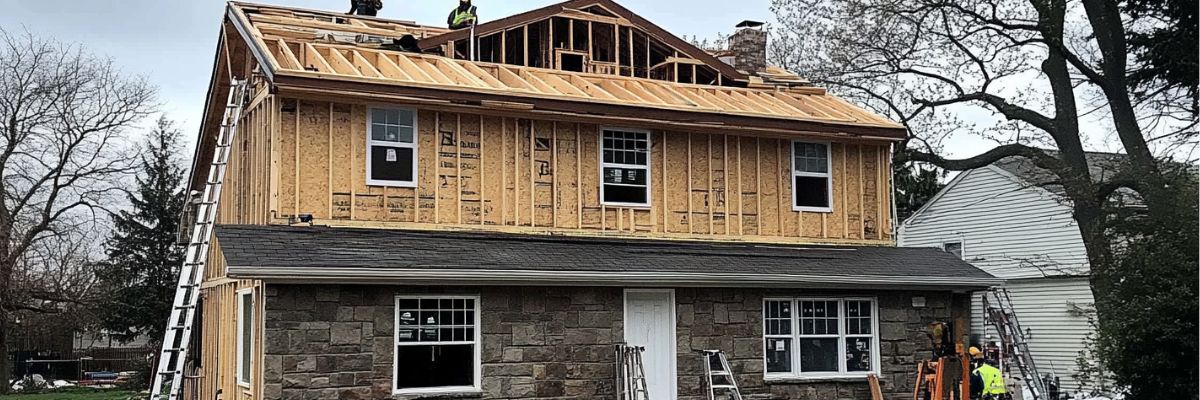
The scope of demolition also matters. A full second-storey addition typically requires removing the entire roof and rebuilding it, which is why it is usually the most expensive category of home addition. Partial second-storey additions or dormers can reduce demolition and roofing costs by reusing parts of the existing roof, but they often have a higher cost per square foot because you still need stairs, structural tie-ins, and system upgrades.
Size, Layout, and How the Space Is Used
Square footage has an obvious impact on total cost. Industry data from Canadian and North American renovation guides suggests that second-storey additions often fall in the range of roughly $175–$400 per square foot for construction alone, with complex projects trending toward the upper end. A full second storey of 800–1,200 square feet adds up quickly, while a partial addition costs less overall but can be less efficient on a per-square-foot basis due to fixed costs like stairs and mechanical work.
How the space is laid out also matters. Adding multiple bathrooms, a laundry, or a secondary suite increases plumbing, venting, waterproofing, and finishing costs compared to adding only bedrooms and circulation space. High-load rooms - such as tiled bathrooms, walk-in closets with built-ins, or spaces requiring sound separation - push costs higher than simple carpeted bedrooms.
Finishes, Systems, and Performance Upgrades
Interior finishes can swing the budget significantly. Flooring choices, tile quality, trim level, built-ins, and stair design all affect cost. A basic stair and durable finishes keep a project closer to the lower end of the range, while custom stairs, hardwood flooring, detailed millwork, and high-end fixtures can move it toward the top.
Mechanical and electrical systems are another major factor. Existing HVAC systems often need to be upsized or replaced to serve the added floor, and in some cases a dedicated heat pump system is installed for the second storey. Electrical panels and service may also need upgrading, particularly if adding electric heating, cooling, or higher plug loads upstairs.
Halifax-Specific Market and Site Factors
Local construction conditions in Halifax push second-storey additions toward the higher end of national cost ranges. New home construction in the region commonly references $300–$400 per square foot for typical builds, and second-storey additions are often at least as expensive on a per-square-foot basis because of structural tie-ins and sequencing challenges. Labour and material costs in Nova Scotia have also trended upward in recent years.
Access and logistics further affect pricing. Tight urban lots, limited space for staging materials, and the need to keep the main floor partially livable during construction all extend timelines and labour hours. Protecting existing finishes - or temporarily removing and reinstating them - adds cost compared with building on an empty site.
Design, Permits, and Soft Costs
Professional and soft costs are a meaningful portion of a second-storey project. Architectural design, structural engineering, surveys, and permit drawings are essential, and more complex designs require more detailing and coordination. Renovation cost guides consistently note that professional fees, permits, and inspections are not minor add-ons but a real part of the total budget.
From a regulatory perspective, second-storey additions must comply with the Nova Scotia Building Code, local zoning rules for height and setbacks, and any heritage or overlay requirements. Permit fees themselves are modest, but redesigns, approvals, or variances can introduce delays and carrying costs that affect the overall project.
.jpg)
Is It Cheaper To Build Up or Out In Halifax?
In Halifax, it is usually cheaper to build out than to build up, especially on lots where there is room to expand horizontally. Building out typically involves extending the foundation and exterior walls without needing to reinforce the existing structure, which keeps structural and engineering costs lower. Horizontal additions also avoid removing and rebuilding the roof, simplify mechanical and electrical tie-ins, and generally cause less disruption to the existing home. As a result, ground-level additions often come in at a lower cost per square foot than second-storey additions.
What Is The ROI Of A Second Storey Addition?
The ROI of a second-storey addition is typically moderate to strong over the long term, but it is rarely a short-term or high-yield investment. In Halifax, adding a second storey is best understood as a value-and-livability upgrade rather than a pure cash-flow play. The return comes from increased resale value, improved functionality, and long-term appreciation, not from immediate income unless the space is converted into a rental unit.
From a resale perspective, second-storey additions often recover 60–80% of construction cost in appraised or market value, with higher recovery in desirable neighbourhoods where larger homes are in short supply. For example, a well-executed $250,000–$400,000 second-storey addition may add $175,000–$300,000+ in market value, especially if it transforms a bungalow into a family-sized home with multiple bedrooms and bathrooms. While this may not fully recoup costs on sale in the short term, it significantly increases the home’s ceiling price and market appeal.
What Is The Most Expensive Part Of A Second Story Addition?
The most expensive part of a second-storey addition is almost always the structural work required to support the new floor, closely followed by roof removal and reconstruction.
Before any new living space is built, engineers often need to assess and reinforce the existing foundation, footings, load-bearing walls, and framing so the house can safely carry the added weight; this can involve new beams, posts, upgraded footings, or localized foundation work, all of which add significant cost.
On top of that, most full second-storey additions require the entire existing roof to be demolished and rebuilt, adding demolition, disposal, new framing, roofing, and weatherproofing costs. Together, these two elements typically consume a large share of the budget - often more than finishes, plumbing, or electrical - because they are unavoidable, highly technical, and labour-intensive.
What Permits Are Required For a Second Story Addition In Halifax?
For a second-storey addition in Halifax, you will typically need the following permits and approvals:
- Building Permit – Required for all structural additions; covers compliance with the Nova Scotia Building Code (structure, fire safety, exits, energy efficiency, plumbing, electrical, and HVAC).
- Zoning Compliance Review – Part of the building permit process to confirm the addition meets local zoning rules for height, setbacks, lot coverage, and massing.
- Development Permit (if applicable) – Required in some zones or where a land-use by-law specifically calls for it before a building permit can be issued.
- Minor Variance Approval (if required) – Needed if the proposed addition does not meet zoning requirements (e.g., exceeds height limits or encroaches into setbacks); approved by the Development Officer or Committee of Adjustment.
- Heritage Approval (if applicable) – Required if the property is in a Heritage Conservation District or is a registered heritage property.
- Plumbing Permit – Required if new bathrooms, kitchens, or plumbing systems are added or modified as part of the second storey.
- Electrical Permit – Required for new or upgraded electrical work; typically obtained through Nova Scotia Power or a licensed electrical contractor.
- Occupancy Permit – Issued after final inspections, confirming the new second storey is safe and legally usable.
Takeaway
A second-storey addition in Halifax is a major investment, with costs typically ranging from $250,000 to $550,000+ depending on square footage, structural reinforcement, and finish level. While building up is usually more complex and expensive than building out, it can dramatically increase livable space, improve long-term functionality, and raise your home’s resale ceiling—especially in neighbourhoods where larger homes are in short supply. The key to protecting your budget and maximizing ROI is understanding the structural realities of your house early and planning the project with clear scope, accurate pricing, and code-compliant design.
If you’re considering a second-storey addition, work with Halifax General Contractors to get clarity before you commit. Our team understands Halifax-specific zoning, structural challenges, permitting requirements, and real-world construction costs, and can assess your home to determine what’s feasible and what it will actually cost. Contact Halifax General Contractors today for a free consultation and detailed quote, and take the first step toward adding a second floor with confidence.
.jpeg)