Do You Need Permits For A Kitchen Renovation In Halifax?
Yes, in Halifax you need a kitchen renovation permit if the renovation affects structure, plumbing, or regulated building systems.
This guide explains exactly how Halifax treats kitchen renovations, when permits are required, when they are not, what documents HRM expects, and how the inspection process works in practice.
How Halifax Regulates Kitchen Renovations
Halifax does not have a special “kitchen permit.” Instead, kitchen projects fall under interior home improvements. Whether you need a permit depends on the scope of work and whether it triggers building-code or life-safety oversight.
HRM aligns closely with the Nova Scotia Building Code, which clearly distinguishes between cosmetic interior work and renovations that affect structure or building systems.
When a Building Permit Is Required in Halifax
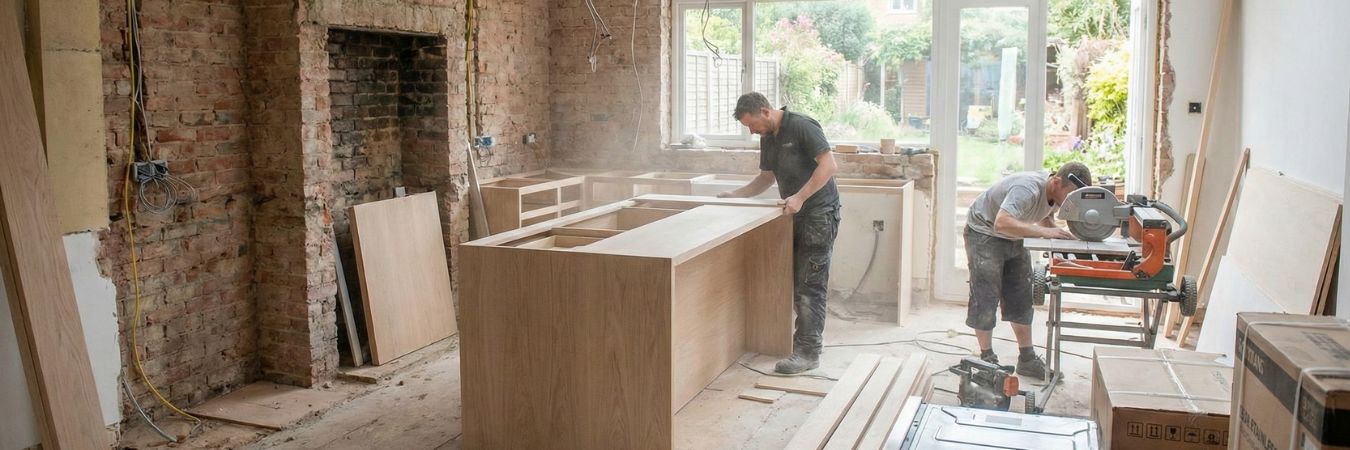
Halifax states that a building permit is required if a kitchen renovation includes changes to interior walls, changes to the existing plumbing system, or any structural repairs or alterations.
Changes to Interior Walls
A building permit is required if your kitchen renovation involves:
- Removing interior walls
- Adding new walls
- Relocating walls to change the kitchen layout
- Opening the kitchen to adjacent rooms
This applies even if the wall is not load-bearing. HRM requires permits for wall changes because they affect fire separation, spatial layout, and sometimes structure.
If a wall is load-bearing or supports floor or roof loads, additional documentation or engineering review may be required.
Structural Repairs or Alterations
Any work that affects structural elements triggers a permit in Halifax, including:
- Modifying framing
- Reinforcing beams or headers
- Altering floor joists or ceiling structure
- Repairs related to structural damage
Even if the kitchen remains a kitchen, structural involvement moves the project into permit-required territory.
Changes to the Plumbing System
Halifax requires a permit when a kitchen renovation alters the existing plumbing system, including:
- Moving the sink location
- Relocating the dishwasher
- Adding plumbing for a kitchen island
- Installing new water supply or drain lines
Once plumbing is moved or reconfigured, the work is no longer considered cosmetic and must be reviewed under building and plumbing regulations.
In most cases, this also means a separate plumbing permit is required in addition to the building permit.
When a Permit Is Typically Not Required in Halifax
Not every kitchen renovation in Halifax needs a permit. HRM and the Nova Scotia Building Code both clearly exempt certain types of interior work.
Cosmetic Kitchen Renovations
You generally do not need a building permit in Halifax if you are only doing like-for-like cosmetic upgrades and no structural or plumbing changes are involved.
Examples include:
- Replacing kitchen cabinets in the same layout
- Installing new countertops
- Replacing flooring
- Painting or refinishing surfaces
- Installing shelving or millwork
- Replacing appliances using existing hookups
This type of work is considered basic interior finishing and does not require a permit under HRM guidelines.
Nova Scotia Building Code Exemptions
The Nova Scotia Building Code Regulations explicitly list the following as work that does not require a building permit:
- Installing or replacing cabinets
- Installing shelving or millwork
- Replacing flooring
This exemption aligns directly with how HRM treats simple kitchen updates. As long as the work does not affect structure, plumbing, or other regulated systems, permits are not required.
Minor Non-Structural Repairs
Small repairs and maintenance tasks also do not trigger permits, such as:
- Patching drywall
- Replacing trim or baseboards
- Painting walls or ceilings
These activities are considered routine maintenance, not regulated construction.
Separate Plumbing and Electrical Permits in Halifax
Even when a building permit is required, kitchen renovations in Halifax often involve trade permits as well.
Plumbing Permits
A plumbing permit is required if you:
- Add new plumbing lines
- Move existing plumbing
- Reconfigure drainage or venting
- Install new fixtures in new locations
This applies even if the overall renovation is modest. Plumbing permits focus on water supply, drainage, venting, and code compliance.
Electrical Permits
Electrical permits are typically required if you:
- Add new circuits
- Relocate outlets or switches
- Install additional outlets to meet code
- Upgrade panels or electrical capacity
- Install major appliances requiring dedicated circuits
Kitchens are heavily regulated for electrical safety due to moisture, heat, and appliance loads, so electrical inspections are common even on mid-sized renovations.
What Halifax Requires for a Kitchen Renovation Permit
When a kitchen renovation requires a permit, HRM expects clear documentation that allows staff to confirm zoning and building-code compliance.
Construction Plans
Halifax requires construction plans for interior renovations, including kitchens. These plans must show:
- Existing interior layout
- Proposed interior layout
- Room labels
- Wall locations and dimensions
- Plumbing fixture locations
- Electrical fixtures and outlets
- Heating and ventilation equipment
Plans must be detailed enough for HRM staff to understand what is changing and how it complies with code.
Designer or Engineer Drawings
For more complex kitchen renovations, such as:
- Structural wall removal
- Major re-layouts
- Load-bearing changes
HRM may require drawings prepared or reviewed by a qualified designer or engineer. This is common when structure is involved.
Scope of Work and Project Value
Permit applications typically require:
- A written description of the renovation scope
- Estimated construction value for fee calculation
- Contractor information, if applicable
Accurate information helps avoid delays and requests for revisions.
Inspections During a Halifax Kitchen Renovation
Once a permit is issued, inspections are required at specific stages of the project.
Owner Responsibility
Halifax emphasizes that the property owner is responsible for requesting inspections. Inspectors do not automatically show up unless inspections are booked.
Typical Inspection Stages
For permitted kitchen renovations, inspections may include:
- Rough-in plumbing inspection
- Rough-in electrical inspection
- Prior-to-drywall inspection once insulation and vapour barrier are complete
- Final inspection after the renovation is finished
Failing to request inspections can result in delays, failed final inspections, or orders to open finished work.
Final Approval
The final inspection confirms that all permitted work complies with approved plans and code requirements. Only after passing final inspection is the permit closed.
How Much Do Kitchen Renovation Permits Cost In Halifax?
In Halifax, the cost of kitchen renovation permits is generally modest compared to the overall renovation budget, but it scales with the scope and value of the work. For most kitchen projects that require a permit, fees fall under the “All Renovations and Repairs” category, which is calculated at $6.88 per $1,000 of the estimated construction value, with a minimum fee of $31.25. For example, a $25,000 kitchen renovation that involves moving walls or plumbing would typically trigger a building permit fee of about $172, plus a $250 residential development permit fee.
If plumbing is altered, a $25 residential plumbing permit fee usually applies, and electrical permits may add additional cost depending on the work. In more complex cases - such as structural changes or properties in areas like Bedford - engineering review fees or lot grading fees can apply, but these are the exception rather than the rule for standard kitchen renovations.
From a budgeting perspective, permit fees usually represent a very small percentage of the total kitchen renovation cost, often well under 2 percent for typical residential projects. However, they can indirectly affect overall cost by influencing timelines, documentation requirements, and inspection sequencing.
Drawings may need to be prepared or reviewed by a designer or engineer, and inspections must be scheduled at specific stages, which can add soft costs or coordination time if not planned properly. That said, permitted work protects homeowners by ensuring code compliance, avoiding stop-work orders, and preventing costly issues during resale or refinancing. In practice, permits add a small upfront cost but help safeguard the much larger investment being made in the kitchen renovation itself.
When a Kitchen Renovation Is Part of a Larger Project
Halifax notes that for more extensive house projects, the building permit process also functions as development approval and provides occupancy sign-off.
If your kitchen renovation is part of a larger interior renovation, such as a full main-floor remodel, the permit scope may be broader and include additional review requirements.
Practical Guidance for Halifax Homeowners
For kitchen renovations in Halifax, a simple rule of thumb applies.
When to Expect Permits
Plan on permits if your kitchen renovation involves:
- Moving or removing walls
- Relocating the sink or dishwasher
- Adding plumbing to an island
- Touching structure
- Adding circuits or major electrical work
In these cases, expect a building permit plus separate plumbing and electrical permits.
When Permits Are Usually Not Needed
Permits are typically not required if you are:
- Replacing cabinets in the same layout
- Updating countertops and flooring
- Installing appliances in existing hookups
- Refreshing finishes only
These projects fall under cosmetic interior work and are exempt under both HRM guidelines and the Nova Scotia Building Code.
Confirm Before You Start
Because enforcement and interpretation can be strict, it is always wise to confirm your specific scope with HRM or a knowledgeable local contractor before starting work. A short confirmation upfront can prevent stop-work orders, fines, or inspection issues later.
Work with Halifax General Contractors to plan, permit, and build your kitchen renovation with confidence. From cosmetic upgrades to full structural remodels, our team handles drawings, permits, inspections, and construction - so there are no surprises.