6 Things to Consider When Designing a Kitchen
A good kitchen design not only enhances usability and aesthetics but also improves your overall cooking experience. According to a survey, an astounding 92% of homeowners incorporate sustainable features during a kitchen renovation. But where do you begin when designing your dream kitchen? There are several important things to consider when designing a kitchen to achieve a space that fits your lifestyle and fulfills all of your needs.
From layout and storage solutions to lighting and flooring choices and ventilation systems - each detail plays a crucial role in securing an efficient and beautiful space for meal preparation. In this article, we will explore six essential things to contemplate when designing a kitchen. By keeping these aspects in mind throughout the remodeling process, you can create a functional yet stylish space that brings joy to every culinary adventure.
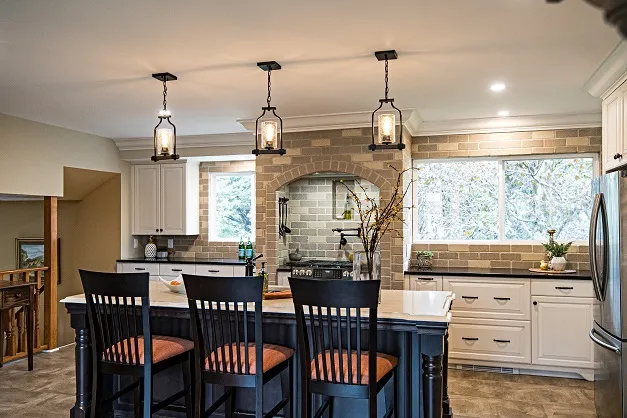
Here are 6 Things to Consider When Designing a Kitchen
Designing a new kitchen involves finding the perfect balance between style and practicality. You want your kitchen to look beautiful while also being functional for cooking and food prep. When creating your kitchen design, there are several important factors you should consider. Let's explore them together!-
Layout
-
Storage
-
Lighting
-
Flooring
-
Work Surface
-
Ventilation
What Is the Golden Rule for Kitchen Design?
When it comes to kitchen design, a golden rule stands the test of time – the Working Triangle. This principle, also known as the Golden Triangle or Kitchen Triangle, suggests that the sink, stove, and fridge should form an imaginary triangle in your kitchen layout. However, this concept was developed decades ago when cooking responsibilities were primarily left to one person, and kitchens were only for food preparation purposes. The modern-day family has changed how cooking duties are shared, and kitchens have become spaces for socializing and entertainment. Despite these shifts in priorities, the Working Triangle remains a solid guideline for designing an efficient kitchen. It ensures that essential work areas are conveniently connected while allowing multiple people to work simultaneously without getting in each other's way.What Are Some Common Problems If Kitchen Design Is Not Planned Properly?
A poorly planned kitchen design can lead to several problems that homeowners may encounter.- One such issue is insufficient storage, which results in clutter and frustration. Careful planning allows for generous upper and lower cabinets, even in small kitchens.
- Another problem that arises from improper planning is a badly planned layout and workflow, making it harder to enjoy working in the kitchen. Your own unique needs should dictate the layout of your kitchen, ensuring an efficient workflow explicitly tailored for you.
- Inadequate counter space is another consequence of poor planning that hinders cooking and food preparation tasks. Sufficient counter space for prepping ingredients, cooking, and storage is essential.
- Poor lighting poses yet another challenge, making it difficult to see while working with sharp objects or hot surfaces - a potential safety hazard. Adequate lighting ensures visibility throughout the workspace.
- Lastly, inefficient ventilation leads to unpleasant odors lingering in the air and smoke buildup during cooking processes - compromising air quality within your home.